

Für dieses Produkt haben wir gegenwärtig keine Händlerangebote in der Datenbank.
in allen Kategorien
in Computer
in Telekommunikation
in Hifi | Audio
in TV | Video | Foto
in Haushalt
in Freizeit
in Mode & Accessoires
in Haus & Garten
in Beauty & Gesundheit
in Auto & Motorrad
- ComputerArbeitsspeicherBauteileCPUDruckerDruckerzubehörEingabegerätFestplatteGrafikkarteKomplettsystemLaufwerkMainboardMonitorMultimediaNetzwerkNotebookNotebookzubehörPC-SpielScannerSoftwareSpeichermediumSpielekonsoleTablet & E-Book-ReaderTaschenrechnerComputer und Zubehör verschiedenster Anbieter findenJetzt shoppen

- TelekommunikationFaxgerätFunkgerätHandyHandyzubehörTelefon (Analog)Telefon (ISDN)Telefon (VoIP)TelefonanlageTelefone, Smartphones und Co. verschiedenster Anbieter findenJetzt shoppen

- Hifi | AudioAudio-KompaktanlageDJ EquipmentHifi-BausteinInstrumentenzubehörKopfhörerLautsprecherMusikinstrumentPortable AudioplayerRadioHiFi- und Audiogeräte verschiedenster Anbieter findenJetzt shoppen
- TV | Video | FotoBeamer + ZubehörBlu-ray-/DVD-GerätCamcorderFernseherFoto-/CamcorderzubehörFotokameraHome Cinema SystemObjektivOptikTV-ReceiverTV-ZubehörTV/Sat-AntenneTV-, Video- und Fotoapparate verschiedenster Anbieter findenJetzt shoppen
- HaushaltBaby-HomeBaby-MobilBack- & GrillgerätBügeleisenDunstabzugshaubeGefrierschrankGeschirrGeschirrspülerHeiz- & KlimagerätHerdKaffeemaschineKüchenhelferKühlschrankMikrowelleNähmaschinePersonenwaageReinigungsgerätStaubsaugerWaschmaschineWäschetrocknerHaushaltsgeräte verschiedenster Anbieter findenJetzt shoppen
- FreizeitBuchCamping + OutdoorFahrradFilme & SerienFitnessgerätModellbauSpiele + PuzzleSpielwarenSportSportschuheWintersportFreizeitartikel verschiedenster Anbieter findenJetzt shoppen

- Mode & AccessoiresMode DamenMode HerrenMode KinderMode-AccessoiresSchmuckSchuheTasche + KofferUhrKleidung, Schuhe & Accessoires verschiedenster Anbieter findenJetzt shoppen

- Haus & GartenBaumarktBürobedarfGartenHeimwerkerMöbelSonstigesTierbedarfWeihnachtenGarten- und Heimwerkerartikel verschiedenster Anbieter findenJetzt shoppen

- Beauty & GesundheitArzneimittelElektrische ZahnbürsteElektrorasiererGesundheitsproduktHaarstylerKontaktlinsenKosmetikWellnessGesundheitsprodukte und Kosmetik verschiedenster Anbieter findenJetzt shoppen

- Auto & MotorradAutoreifen + FelgeAutozubehörCar HifiMotorradNavigationssystemAuto- und Motorradzubehör verschiedenster Anbieter findenJetzt shoppen
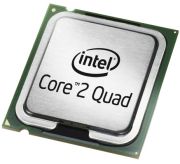
Abbildung ggf. abweichend
Preisalarm
Intel Core 2 Quad Q9400
Hersteller: Intel
Abbildung ggf. abweichend
Hersteller: Intel
- Prozessor
- Prozessor: Intel
- Prozessor Modell: Intel Core 2 Quad
- Sockel: 775
- Prozessor Modellnummer: Q9400
- L2-Cache: 6144KB
- Befehlssätze: iAMT2, MMX, SSE, SSE2, SSE3, SSE4.1, SSSE3
- Max. Verbrauch: 95 W
Hersteller:
Intel
Tests und Testberichte

Test: Einzeltest: Intel Core 2 Quad Q9400
Zitat: Pros: + Znakomita wydajność zwłaszcza w aplikacjach wykorzystujących wszystkie rdzenie procesora
+ Rozsądna jak na układ czterordzeniowy cena
Cons: - Standardowy układ chłodzenia zbyt mało wydajny przy mocnym overclockingu

Test: Einzeltest: Introducing Intel Core 2 Quad Q9400
Zitat: Pros: + Performance Vs. Price Ratio
+ Not Much Heat Is Produced
+ Lower Power Consumption
+ 45nm Architecture
+ Good Overclocker
Cons: - Does Not Like Too Much Voltage
- Only 6MB L2 Cache
While I was initally skeptical that the Q9400 would perform better than the Q6600, after running some benchmarks I was proven wrong. One reason was the lower L2 Cache size of the Q9400. I also believed that the Q9400 will perform poorly in overclocked conditions. This was not the case, however. While the current Q6600 I owned had a 3.6GHz limit, the Q9400 was able to surpass the Q6600 by 240Mhz on each core, resulting in a total overclocking yield of 3.84GHz per core. Many say that with the Q6600—especially the G0 stepping versions—Intel finally mastered overclocking. For some reason, however, the Q9400 one-upped its retail counterpart in the overclocking arena. Despite the fact that the Q9400 did not top all of the tests, it´s still well worth the money. For instance, if asked to choose between a 65nm Quad-Core or go with a 45nm Quad-Core, most consumers last year would have chosen the 65nm chip due to its supposedly higher overclocking performance. What most consumers do not take into account, however, is the 45nm processor´s higher performance in everyday computing. It is worth noting, though, that a year ago, 45nm CPUs cost substantially more than 65nm chips. Another benefit is that the Q9400 had over the Q6600 was lower power consumption and heat production even in overclocked settings. The AMD Phenom X4 9350e processor, on the other hand, is ridiculously overpriced for its level of performance. While it is a 65W TDP, the chip exceeds the price vs. performance ratio so much that in some cases the Q9400 performed 2x-4x better than the 9350e, even though they are in the same price range. Considering that the Q6600 only had the SSE3 instruction set extension with all older versions, the Q9400 with the new SSE4.1 Instruction Set Extension tremendously improved overall performance in our benchmarks. The Q9400 running at 2.66Ghz and 1.2v should be a perfect Quad-Core processor for any gamer or multi-processing guru. The Q9400 especially improves the performance of 3D rendering and Film/Video editing software. These types of software take advantage of multi-core processors, which is why they show a large leap in performance over lower Dual-Core models. This processor is excellent not only for gamers, but also for overclockers. As we have seen, this CPU runs stable up to 3.84Ghz at 1.4125V. Intel hit the spot once again with the Core 2 Quad Q9400 processor.

Test: Einzeltest: Intel Core 2 Quad Q9400
Zitat: Points forts:
- Quad-core oblige : bonnes performances dans les applications audio / vidéo / 3D
- Reste assez performant dans les applications non optimisées quad-core
Points faibles:
- Consommation dans l´absolu
Comme tous les processeurs à quatre cœurs, le Q9400 se destine essentiellement aux personnes utilisant fréquemment des logiciels d´édition vidéo, photo ou 3D. Pour les autres, l´intérêt est plus limité.
Meinungen
Beliebte Produkte

Intel Core i3 14100 Boxed
ab 168,99€

Intel Core i5 14600K Tray
ab 247,99€

Intel Core i7 14700K Boxed
ab 379,99€

Intel Core i9 14900K Boxed
ab 465,48€

Intel Core i5 14400 Boxed
ab 199,90€

HP Prozessor-Upgrade X5670 (595726-B21)
ab 1.131,00€
HP Prozessor-Upgrade X5670 (633414-B21)
ab 1.487,50€

MSI X299 XPOWER GAMING AC
ab 385,27€
Produktdaten
| Prozessor: | Intel |
|---|---|
| Prozessor Modell: | Intel Core 2 Quad |
| Prozessor Modellnummer: | Q9400 |
| Sockel: | 775 |
| L2-Cache: | 6144KB |
| Befehlssätze: | iAMT2, MMX, SSE, SSE2, SSE3, SSE4.1, SSSE3 |
| Max. Verbrauch: | 95 W |
1 Meinungen**
Neueste
wird gebraucht
|
17.10.2011
Ich finde diesen Prozessor sehr gut für meine Verwendung. Man kann tolle Sachen damit bearbeiten und er ist sehr schnell.
Intel Core 2 Quad Q9400 Gesamte Bewertungen
5.0out of 5
Basierend auf 1 Nutzer-Meinungen
Teile uns deine Meinung zum Produkt mit!
Tests und Testberichte Intel Core 2 Quad Q9400
pcworld.pl
Ausgabe 11/2009
Test: Einzeltest: Intel Core 2 Quad Q9400
Zitat: "Pros: + Znakomita wydajność zwłaszcza w aplikacjach wykorzystujących wszystkie rdzenie procesora
+ Rozsądna jak na układ czterordzeniowy cena
Cons: - Standardowy układ chłodzenia zbyt mało wydajny przy ..."
pcshoptalk.com
Ausgabe 4/2009
Test: Einzeltest: Introducing Intel Core 2 Quad Q9400
Zitat: "Pros: + Performance Vs. Price Ratio
+ Not Much Heat Is Produced
+ Lower Power Consumption
+ 45nm Architecture
+ Good Overclocker
Cons: - Does Not Like Too Much Voltage
- Only 6MB L2 Cache
While I was initally skeptical that the Q9400 would perform better than the Q6600, after running some benchmarks I was prove..."
lesnumeriques.com
Ausgabe 10/2008
Test: Einzeltest: Intel Core 2 Quad Q9400
Zitat: "Points forts:
- Quad-core oblige : bonnes performances dans les applications audio / vidéo / 3D
- Reste assez performant dans les applications non optimisées quad-core
Points faibles:
- Consommation da..."


Beliebte Produkte



* Die Preise und Versandkosten können sich seit der letzten Aktualisierung beim jeweiligen Händler verändert haben. Alle Preise sind Angaben des jeweiligen Anbieters inklusive Umsatzsteuer, zzgl. Versand - alle Angaben ohne Gewähr. Unser Angebot umfasst nur Anbieter, die für Ihre Weiterleitung an den Shop eine Klick-Provision an uns zahlen.
** Es ist uns nicht möglich zu prüfen, ob die veröffentlichten Bewertungen von Verbrauchern stammen, die die Produkte tatsächlich verwendet oder erworben haben.
** Es ist uns nicht möglich zu prüfen, ob die veröffentlichten Bewertungen von Verbrauchern stammen, die die Produkte tatsächlich verwendet oder erworben haben.
* Die Preise und Versandkosten können sich seit der letzten Aktualisierung beim jeweiligen Händler verändert haben. Alle Preise sind Angaben des jeweiligen Anbieters inklusive Umsatzsteuer, zzgl. Versand - alle Angaben ohne Gewähr. Unser Angebot umfasst nur Anbieter, die für Ihre Weiterleitung an den Shop eine Klick-Provision an uns zahlen.
** Es ist uns nicht möglich zu prüfen, ob die veröffentlichten Bewertungen von Verbrauchern stammen, die die Produkte tatsächlich verwendet oder erworben haben.
** Es ist uns nicht möglich zu prüfen, ob die veröffentlichten Bewertungen von Verbrauchern stammen, die die Produkte tatsächlich verwendet oder erworben haben.


©1999- 2026 by guenstiger.de
Zu teuer?
Jetzt Preisalarm setzen!
Jetzt Preisalarm setzen!
Preisalarm
Intel Core 2 Quad Q9400 bewerten

Das hat leider nicht funktioniert!
Die Seite konnte nicht aufgerufen werden, bitte versuchen Sie es später nochmal.

Formular schließen?
