Für dieses Produkt haben wir gegenwärtig keine Händlerangebote in der Datenbank.
in allen Kategorien
in Computer
in Telekommunikation
in Hifi | Audio
in TV | Video | Foto
in Haushalt
in Freizeit
in Mode & Accessoires
in Haus & Garten
in Beauty & Gesundheit
in Auto & Motorrad
- ComputerArbeitsspeicherBauteileCPUDruckerDruckerzubehörEingabegerätFestplatteGrafikkarteKomplettsystemLaufwerkMainboardMonitorMultimediaNetzwerkNotebookNotebookzubehörPC-SpielScannerSoftwareSpeichermediumSpielekonsoleTablet & E-Book-ReaderTaschenrechnerComputer und Zubehör verschiedenster Anbieter findenJetzt shoppen
- TelekommunikationFaxgerätFunkgerätHandyHandyzubehörTelefon (Analog)Telefon (ISDN)Telefon (VoIP)TelefonanlageTelefone, Smartphones und Co. verschiedenster Anbieter findenJetzt shoppen

- Hifi | AudioAudio-KompaktanlageDJ EquipmentHifi-BausteinInstrumentenzubehörKopfhörerLautsprecherMusikinstrumentPortable AudioplayerRadioHiFi- und Audiogeräte verschiedenster Anbieter findenJetzt shoppen
- TV | Video | FotoBeamer + ZubehörBlu-ray-/DVD-GerätCamcorderFernseherFoto-/CamcorderzubehörFotokameraHome Cinema SystemObjektivOptikTV-ReceiverTV-ZubehörTV/Sat-AntenneTV-, Video- und Fotoapparate verschiedenster Anbieter findenJetzt shoppen
- HaushaltBaby-HomeBaby-MobilBack- & GrillgerätBügeleisenDunstabzugshaubeGefrierschrankGeschirrGeschirrspülerHeiz- & KlimagerätHerdKaffeemaschineKüchenhelferKühlschrankMikrowelleNähmaschinePersonenwaageReinigungsgerätStaubsaugerWaschmaschineWäschetrocknerHaushaltsgeräte verschiedenster Anbieter findenJetzt shoppen
- FreizeitBuchCamping + OutdoorFahrradFilme & SerienFitnessgerätModellbauSpiele + PuzzleSpielwarenSportSportschuheWintersportFreizeitartikel verschiedenster Anbieter findenJetzt shoppen

- Mode & AccessoiresMode DamenMode HerrenMode KinderMode-AccessoiresSchmuckSchuheTasche + KofferUhrKleidung, Schuhe & Accessoires verschiedenster Anbieter findenJetzt shoppen
- Haus & GartenBaumarktBürobedarfGartenHeimwerkerMöbelSonstigesTierbedarfWeihnachtenGarten- und Heimwerkerartikel verschiedenster Anbieter findenJetzt shoppen

- Beauty & GesundheitArzneimittelElektrische ZahnbürsteElektrorasiererGesundheitsproduktHaarstylerKontaktlinsenKosmetikWellnessGesundheitsprodukte und Kosmetik verschiedenster Anbieter findenJetzt shoppen
- Auto & MotorradAutoreifen + FelgeAutozubehörCar HifiMotorradNavigationssystemAuto- und Motorradzubehör verschiedenster Anbieter findenJetzt shoppen
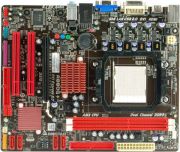
Abbildung ggf. abweichend
Preisalarm
Biostar A880G+
Hersteller: Biostar
Abbildung ggf. abweichend
Hersteller: Biostar
- Mainboard
- Sockel: AM3
- Speichertyp: DDR2
- Anschlüsse: USB 2.0, Gigabit Ethernet RJ45 (1000 Mbit)
- Formfaktor: MicroATX
- Anzahl DIMM: 2
- Speichertaktung: 1.333 MHz
- LAN-Chip: Realtek RTL8111DL
Hersteller:
Biostar
Tests und Testberichte

Test: Einzeltest: Biostar A880G+ AMD Motherboard
Zitat: While I have long been a fan of Biostar´s T-series motherboards for many years, I have shied away from their standard class of desktop products. Aside from their difference in appearance, these much cheaper versions of their boards offered few of the same features as the enthusiast-class T-series. However Biostar appears to have changed this beginning with their latest collection of AMD 800-series chipset offerings. Not only does the A880G+ look nearly identical to the TA880G+ but also mimics it in features and options. The A880G+ is substantially smaller than its TA880G+ sibling, and there are a handful of concessions that are made to squeeze everything onto the narrower PCB. It loses two DIMM slots, two SATA ports, one USB header and a 1x PCI-e slot, as well as offering a more basic audio component and a reduced number of rear I/O jacks. But all of the important bits are there, the AMD 880G/SB710 chipset, dual-channel DDR3, Gigabit LAN, HDMI and more. Up to 125W processors are supported thanks to solid state capacitors and chokes for the CPU phase power, core unlocking is available through the ACC SB710 SouthBridge and GameBoost offers a single hotkey overclock of the onboard HD4250 graphics. Where the A880G+ really shines is in it´s huge power savings over a comparable full-size 880G motherboard. The Kill-A-Watt meter registered only 48W usage at idle, and 126W under a full CPU/GPU load using an Athlon-II X2 processor and onboard HD4250 graphics. If you´re looking for a real power miser of a motherboard to use in an HTPC application, look no further. That´s easily the lowest idle draw of any board we´ve tested, nearly by half. The Biostar A880G+ comes in right around $60 at most online retailers, making it also the least expensive 800-series motherboard I could find, even less than many 700-series boards still on the market. Obviously the compact footprint and smaller feature set are not for everyone, but it would make a perfect addition to any HTPC or SFF desktop class computer.
Produktdetails
LAN-Geschwindigkeit: 10 Mbit (IEEE 802.3), 100 Mbit (IEEE 802.3u), 1000 Mbit (IEEE 802.3ab)
Audio-Chip: Realtek ALC662
Audio-Kanäle: 5.1 (Surround)
RAID Kompatibilität: RAID 0, RAID 0+1, RAID 1
Beliebte Produkte

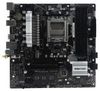
Biostar A620MS
ab 74,29€

Biostar B550MHP
ab 57,90€

Biostar A520MHP
ab 45,89€

Biostar A520MT
ab 82,29€

Biostar A620MP-E Pro
ab 78,00€

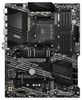
MSI B550-A Pro
ab 102,87€

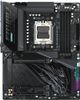
GIGABYTE X870E AORUS Elite X3D
ab 317,00€

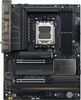
ASUS ProArt X870E-Creator WiFi
ab 417,36€

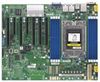
Supermicro H12SSL-NT
ab 790,32€

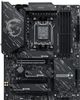
MSI X870E Gaming Plus WiFi
ab 208,85€
Produktdaten
| RAID Kompatibilität: | RAID 0, RAID 0+1, RAID 1 |
|---|---|
| Anschlüsse: | USB 2.0, Gigabit Ethernet RJ45 (1000 Mbit) |
| Schnittstellen: | IDE, S-ATA II (300 MB/s) |
| PCI-Schnittstelle: | 2x |
| Formfaktor: | MicroATX |
|---|---|
| Maße: | B244 mm x T200 mm |
| Sockel: | AM3 |
|---|
| Anzahl DIMM: | 2 |
|---|---|
| Speichertyp: | DDR2 |
| Speichertaktung: | 1.333 MHz |
| LAN-Chip: | Realtek RTL8111DL |
|---|---|
| LAN-Geschwindigkeit: | 10 Mbit (IEEE 802.3), 100 Mbit (IEEE 802.3u), 1000 Mbit (IEEE 802.3ab) |
| Audio-Chip: | Realtek ALC662 |
| Audio-Kanäle: | 5.1 (Surround) |
Biostar A880G+ Bewertungen

Sei der Erste, der dieses Produkt bewertet! Deine Erfahrung kann anderen Nutzern bei ihrer
Tests und Testberichte Biostar A880G+
ocia.net
Ausgabe 11/2010
Test: Einzeltest: Biostar A880G+ AMD Motherboard
Zitat: "While I have long been a fan of Biostar´s T-series motherboards for many years, I have shied away from their standard class of desktop products. Aside from their difference in appearance, these much cheaper ..."
Beliebte Kaufberatungen
- Beliebt und richtig schnell: X670E-Mainboards im Vergleich – das "E" steht für Extreme13.08.2024

- Mainboard-Kaufberatung für AM5 Sockel: Die beliebtesten Motherboards im Vergleich14.12.2023
- Beliebte Mainboards mit B650E-Sockel im Vergleich25.07.2023
- Preis-Leistungs-Tipp: A620-Mainboards im Vergleich24.07.2023
- Beliebte AMD-Mainboards mit AM4-Sockel im Vergleich16.02.2023

- AMD Mainboards im Vergleich: Die beliebtesten Modelle für jeden PC13.05.2022
- Beliebte B660-Mainboards im Vergleich: So ist der PC auf einer guter Basis07.08.2023
- Beliebte Mainboards mit B760-Sockel im Vergleich25.07.2023
- Beliebte Mainboards für Intel-1200-Sockel im Vergleich24.02.2023
- Beliebte Mainboards für Intel Sockel 1700 im Vergleich23.02.2023
Beliebte Produkte

* Die Preise und Versandkosten können sich seit der letzten Aktualisierung beim jeweiligen Händler verändert haben. Alle Preise sind Angaben des jeweiligen Anbieters inklusive Umsatzsteuer, zzgl. Versand - alle Angaben ohne Gewähr. Unser Angebot umfasst nur Anbieter, die für Ihre Weiterleitung an den Shop eine Klick-Provision an uns zahlen.
* Die Preise und Versandkosten können sich seit der letzten Aktualisierung beim jeweiligen Händler verändert haben. Alle Preise sind Angaben des jeweiligen Anbieters inklusive Umsatzsteuer, zzgl. Versand - alle Angaben ohne Gewähr. Unser Angebot umfasst nur Anbieter, die für Ihre Weiterleitung an den Shop eine Klick-Provision an uns zahlen.


©1999- 2026 by guenstiger.de
Zu teuer?
Jetzt Preisalarm setzen!
Jetzt Preisalarm setzen!
Preisalarm
Biostar A880G+ bewerten

Das hat leider nicht funktioniert!
Die Seite konnte nicht aufgerufen werden, bitte versuchen Sie es später nochmal.

Formular schließen?
