in allen Kategorien
in Computer
in Telekommunikation
in Hifi | Audio
in TV | Video | Foto
in Haushalt
in Freizeit
in Mode & Accessoires
in Haus & Garten
in Beauty & Gesundheit
in Auto & Motorrad
- ComputerArbeitsspeicherBauteileCPUDruckerDruckerzubehörEingabegerätFestplatteGrafikkarteKomplettsystemLaufwerkMainboardMonitorMultimediaNetzwerkNotebookNotebookzubehörPC-SpielScannerSoftwareSpeichermediumSpielekonsoleTablet & E-Book-ReaderTaschenrechnerComputer und Zubehör verschiedenster Anbieter findenJetzt shoppen

- TelekommunikationFaxgerätFunkgerätHandyHandyzubehörTelefon (Analog)Telefon (ISDN)Telefon (VoIP)TelefonanlageTelefone, Smartphones und Co. verschiedenster Anbieter findenJetzt shoppen

- Hifi | AudioAudio-KompaktanlageDJ EquipmentHifi-BausteinInstrumentenzubehörKopfhörerLautsprecherMusikinstrumentPortable AudioplayerRadioHiFi- und Audiogeräte verschiedenster Anbieter findenJetzt shoppen
- TV | Video | FotoBeamer + ZubehörBlu-ray-/DVD-GerätCamcorderFernseherFoto-/CamcorderzubehörFotokameraHome Cinema SystemObjektivOptikTV-ReceiverTV-ZubehörTV/Sat-AntenneTV-, Video- und Fotoapparate verschiedenster Anbieter findenJetzt shoppen

- HaushaltBaby-HomeBaby-MobilBack- & GrillgerätBügeleisenDunstabzugshaubeGefrierschrankGeschirrGeschirrspülerHeiz- & KlimagerätHerdKaffeemaschineKüchenhelferKühlschrankMikrowelleNähmaschinePersonenwaageReinigungsgerätStaubsaugerWaschmaschineWäschetrocknerHaushaltsgeräte verschiedenster Anbieter findenJetzt shoppen

- FreizeitBuchCamping + OutdoorFahrradFilme & SerienFitnessgerätModellbauSpiele + PuzzleSpielwarenSportSportschuheWintersportFreizeitartikel verschiedenster Anbieter findenJetzt shoppen

- Mode & AccessoiresMode DamenMode HerrenMode KinderMode-AccessoiresSchmuckSchuheTasche + KofferUhrKleidung, Schuhe & Accessoires verschiedenster Anbieter findenJetzt shoppen

- Haus & GartenBaumarktBürobedarfGartenHeimwerkerMöbelSonstigesTierbedarfWeihnachtenGarten- und Heimwerkerartikel verschiedenster Anbieter findenJetzt shoppen

- Beauty & GesundheitArzneimittelElektrische ZahnbürsteElektrorasiererGesundheitsproduktHaarstylerKontaktlinsenKosmetikWellnessGesundheitsprodukte und Kosmetik verschiedenster Anbieter findenJetzt shoppen
- Auto & MotorradAutoreifen + FelgeAutozubehörCar HifiMotorradNavigationssystemAuto- und Motorradzubehör verschiedenster Anbieter findenJetzt shoppen

Suche verfeinern
Filtern
Alles löschen
Kategorie
✓Preis
✓Marke
0Verkäufer
0Deine Suche ergab leider keine Ergebnisse. Bitte ändere die zuletzt verwendeten Filter und versuche es erneut.
Zeigt 901 - 910 von 910 Ergebnissen
Filtern
Sortieren:
Beste Treffer
Beste Treffer
Preis: niedrig bis hoch
Preis: hoch bis niedrig
Ansicht:

Quelle: Raleo
- Isolierstoffgehäuse für Kleinschützen und Motorschutzrelais
- Schutzart IP65 gegen Staub und Spritzwasser
- Hergestellt aus glasfaserverstärktem Polycarbonat
- Metrische Vorprägungen für einfache Installation
- Maße: Höhe 16 cm, Breite 10 cm, Tiefe 14,5 cm
Jetzt bewerten
ab 31,53€
2 Angebote
Zum Preisvergleich
Quelle: Raleo
- Sicherungshalter
- Nennstrom: 50 A
- Nennspannung: AC 690 V
- Baugröße: 14 x 51 mm, 3-polig
Jetzt bewerten
ab 94,86€
2 Angebote
Zum Preisvergleich
Quelle: kaufland.de
- Rucksack
- Material: CORDURA 700 den IRR
- Anzahl der Fächer: 2
- Netzrücken: Nein
- Brustgurt: Nein
- Deckelfach: Nein
- Frontfach: Ja
- Notsignalpfeife: Nein
- Gerätehalterung: Nein
- Gummizughalterung: Nein
- Handytasche: Nein
- Hüftgurt: Ja
- Innentasche integriert: Nein
- Kompressionsriemen: Ja
- Kühlfach: Nein
- Nasswäschefach: Nein
- Wasserabweisend: Nein
- Wasserdicht: N
Jetzt bewerten
ab 220,10€
3 Angebote
Zum Preisvergleich
Quelle: amazon.de
- Rucksack
- Material: Cordura 700 DEN, hohe Abrieb- und Reißfestigkeit
- Weit zu öffnender Reißverschluss für optimale Einsicht
- Klettstreifen zur Anbringung eines Namensschildes
- Molle-System zur Befestigung weiterer Taschen
- Gewicht von ca. 0,10 kg
ab 18,15€
21 Angebote
Zum Preisvergleich
Quelle: Galaxus.de
- Isolierstoffgehäuse mit Tragschiene nach IEC/EN 60715
- Sortiment: Kleingehäuse CI-K, Leergehäuse, Einzelgerät
- Schutzart: Front IP65, IP65 bei Leitungseinführung in Durchstecktechnik
- Material: glasfaserverstärktes Polycarbonat
- Abmessungen: Breite 160 mm, Höhe 240 mm, Tiefe 125 mm
- Einbautiefe bei Tragschiene 7,5 mm, Höhe 93 mm
Jetzt bewerten
ab 50,35€
6 Angebote
Zum Preisvergleich
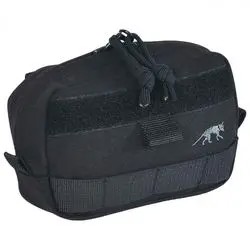
- Taktische Zusatztasche mit YKK-Reißverschluss
- Molle-System kompatibel für vielseitige Nutzung
- Geeignet für Erste Hilfe, Organizer oder EDC
- Innenbereich mit D-Ring und elastischen Bändern
- Klettfläche für Namensschild und Patches
- Maße: 15 x 10 x 4 cm, Gewicht 100 g, Material: Cordura 700 den
Jetzt bewerten
ab 7,00€
23 Angebote
Zum Preisvergleich

Gummidichtung
- Klebelösung zum Abdichten von größeren Spalten
- Für Spalten von 2 - 5 mm
- Selbstklebend
- Maße: B9 mm x L10 m
Jetzt bewerten
ab 9,85€
16 Angebote
Zum Preisvergleich
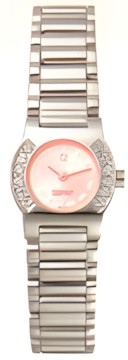
- Maße: Ø 20 mm, 6,5 cm Wandabstand bis zur Mitte der Gardinenstange
Jetzt bewerten
ab 59,96€
3 Angebote
Zum Preisvergleich
Quelle: Galaxus.de
- Sicherungshalter
- Nennstrom: 50 A
- Nennspannung: AC 690 V
- Baugröße: 14 x 51 mm, 2-polig
Jetzt bewerten
ab 91,57€
4 Angebote
Zum Preisvergleich
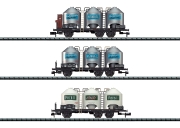
Privatwagen - Eingestellt bei der DB - Kulissenführung für Kurzkupplungen - Norm-Kupplungsschacht - Epoche: III - Gesamtlänge: 218mm
Jetzt bewerten
ab 54,90€
6 Angebote
Zum Preisvergleich
Anzeige
Weitere Angebote unserer Partner-Shops

Passacaglia c-Moll: (Original für Orgel). BWV 582. Klavier. B00006M0KU
Passacaglia c-Moll: (Original für Orgel). BWV 582. Klavier. BOOSEY

12,00€
Versand: frei!

Henle, Günter Frédéric Chopin - Fantasie f-moll op. 49
Scholars have long been trying to figure out the mystery of Chopin’s one and only solo Fantasie. The highly individual form is a puzzle to all who prefer more traditional genre concepts. Is it a sonata movement, a rondo, or even a free combination of character movements such as march, recitative or chorale? Chopin lovers have no need of such considerations, seeing that nobody would ever dare to doubt that this Fantasie is one of the greatest works from his pen. After completing the composition, Chopin wrote “The sky is bright, but my heart is afflicted by sorrow”. This gloomy contrast pervades the Fantasie. It is an exceptional work from every point of view, now provided as a separate publication by way of a faithful Henle Urtext edition.
Sofort lieferbar

12,00€
Versand: frei!

Henle, Günter Frédéric Chopin - Fantasie f-moll op. 49 A1001294993
Scholars have long been trying to figure out the mystery of Chopin’s one and only solo Fantasie. The highly individual form is a puzzle to all who prefer more traditional genre concepts. Is it a sonata movement, a rondo, or even a free combination of character movements such as march, recitative or chorale? Chopin lovers have no need of such considerations, seeing that nobody would ever dare to doubt that this Fantasie is one of the greatest works from his pen. After completing the composition, Chopin wrote “The sky is bright, but my heart is afflicted by sorrow”. This gloomy contrast pervades the Fantasie. It is an exceptional work from every point of view, now provided as a separate publication by way of a faithful Henle Urtext edition.
Sofort lieferbar

12,00€
Versand: frei!

Fix-o-moll Klettpunkt (Durchmesser: 20 mm, Schwarz, Kleben, 8 Stk.)
Der Klettpunkt von Fix-o-moll besteht aus einem Haken- und Flauschteil und sorgt für feste Verbindungen, die jederzeit geöffnet und wieder geschlossen werden können. Die Klettpunkte sind selbstklebend ausgerüstet.
1-2 Werktage

12,00€
Versand: 5,70€

Henle G. Verlag Sonate a-moll Wq 132 für Flöte solo 1591ad7b-717b-4f75-804f-28bc670cd24b
*Sonate a-moll Wq 132 für Flöte solo * - Besetzung: Flöte solo / 12€ / Taschenbuch
Sofort Lieferbar

12,00€
Versand: frei!

Henle, Günter Carl Philipp Emanuel Bach - Flötensonate a-moll Wq 132
For whom did Carl Philipp Emanuel Bach write his solo sonata? The addressee of the sonata is frequently thought to be the King Friedrich II of Prussia. Yet Bach would not have made music that was exclusively intended for the king available for all. And the Sonata for flute solo was published twice in the 1760s. The riddle is not to be solved. Today the three-movement work is one of the solo pieces that all flautists have to have played once – it is truly regal music. The flautist Karl Kaiser has contributed informed comments on performance practice.
Sofort lieferbar
12,00€
Versand: frei!

Henle, Günter Ludwig van Beethoven - Klaviersonate Nr. 32 c-moll op. 111
Beethoven once reported that he had written down his three last piano sonatas (op. 109, 110, 111) in 1820 to 1822 in one go, and they certainly form a closely related group. Beethoven dedicated his very last sonata, no. 32 in C minor op. 111, to his patron Archduke Rudolph of Austria, who shortly beforehand had also been the dedicatee of Beethoven’s famous “Missa solemnis”. Experts consider Beethoven’s last sonata to be the great, concluding climax of his piano sonata output. Its unusual two-movement form unites grandeur with simplicity. This carefully edited Henle Urtext edition offers a solid basis from which to delve into one of Beethoven’s most difficult piano sonatas.
Sofort lieferbar
12,00€
Versand: frei!

Henle, Günter Franz Schubert - Klaviersonate a-moll op. post. 164 D 537
Franz Schubert’s Piano Sonata in a minor op. post. 164, presented here in an Urtext edition, numbers among his early sonatas written between 1815 and 1819. In many of these pieces, Schubert still struggles with form; the Sonata in a minor from March 1817, however, is already wonderfully accomplished. In contrast to Schubert’s two later a-minor piano sonatas, the key here does not yet result in a tragic, fatalistic sound. This is also due to the fact that he took every opportunity to brighten the key to the major, or to swerve into neighbouring, friendlier harmonic regions.
Sofort lieferbar
12,00€
Versand: frei!

Henle, Günter Carl Philipp Emanuel Bach - Flötensonate a-moll Wq 132 A1032502609
For whom did Carl Philipp Emanuel Bach write his solo sonata? The addressee of the sonata is frequently thought to be the King Friedrich II of Prussia. Yet Bach would not have made music that was exclusively intended for the king available for all. And the Sonata for flute solo was published twice in the 1760s. The riddle is not to be solved. Today the three-movement work is one of the solo pieces that all flautists have to have played once – it is truly regal music. The flautist Karl Kaiser has contributed informed comments on performance practice.
Sofort lieferbar
12,00€
Versand: frei!

Streichquartett f-moll op. post. 80 Studien-Edition: Besetzung: Streichquartette (Studien-Editionen: Studienpartituren) 113383297
Streichquartett f-moll op. post. 80 Studien-Edition: Besetzung: Streichquartette (Studien-Editionen: Studienpartituren)
12,00€
Versand: frei!

Klaviersonate c-moll op. 111: Instrumentation: Piano solo (G. Henle Urtext-Ausgabe) B000E97VQ8
SONATE POUR PIANO N 32 EN UT MINEUR OP. 111 Henle Verlag Henle, G. Verlag
12,00€
Versand: frei!

Frölich und Kaufmann Deutschlands Zukunft. Dur oder Moll? Vortragsveranstaltung zum 80. Geburtstag von Thomas Oppermann. 1539078
Wenn der Moderator des heute-journals Claus Kleber, der Bildungspolitiker Manfred Erhardt und der Wirtschaftsjournalist der Süddeutschen Zeitung Marc Beise zusammenkommen, darf man scharfsinnige Einsichten in die gegenwärtige Situation der Bundesrepublik erwarten. Unter dem Titel »Deutschlands Zukunft - Dur oder Moll?« werden in drei Beiträgen grundsätzliche Probleme des deutschen Engagements in Afghanistan, der Bildungspolitik sowie der EU-Währungskrise analysiert. Dass der Euro der Grund für die heutige Finanzkrise sei, bestreitet mit Verve Marc Beise. Dass eine fördernde und zugleich leistungsorientierte Bildungspolitik essentiell ist für die Zukunft Deutschlands, dafür plädiert Manfred Erhardt. Und wie steinig, aber auch unvermeidlich der deutsche Einsatz in Afghanistan ist, führt Claus Kleber in eindrucksvoller Weise aus. Gehalten wurden die Vorträge seiner früheren Doktoranden zu Ehren des 80. Geburtstages des bekannten Tübinger Ordinarius Thomas Oppermann, der sich in vielfacher Weise um Europarecht, Verfassungsrecht und internationales Wirtschaftsrecht verdient gemacht hat und hier eingangs von Barbara Remmert, Dekanin der Tübinger Juristenfakultät, gewürdigt wird.
1-3 Werktage

12,00€
Versand: 6,99€

Fantasie f-Moll op. 49. Klavier: Instrumentation: Piano solo (G. Henle Urtext-Ausgabe) B000786HKC
Chopin: Fantasie in f-Moll, op. 49 G. Henle Henle, G. Verlag
12,00€
Versand: frei!

Henle, Günter Johann Sebastian Bach - Chromatische Fantasie und Fuge d-moll BWV 903 und 903a
Bach’s Chromatic Fantasy and Fugue BWV 903 and 903a is one of his most fascinating works. It was apparently already greatly admired during his lifetime, for it survives in numerous copies which present some occasionally very different versions, especially in the Fantasy. Bach seems to have revised it several × since there is no extant autograph, one of these divergent versions of the Fantasy has been reproduced in the Appendix of the Henle Urtext edition.
Sofort lieferbar
12,00€
Versand: frei!

Henle, Günter Ludwig van Beethoven - Klaviersonate Nr. 32 c-moll op. 111 A1001255597
Beethoven once reported that he had written down his three last piano sonatas (op. 109, 110, 111) in 1820 to 1822 in one go, and they certainly form a closely related group. Beethoven dedicated his very last sonata, no. 32 in C minor op. 111, to his patron Archduke Rudolph of Austria, who shortly beforehand had also been the dedicatee of Beethoven’s famous “Missa solemnis”. Experts consider Beethoven’s last sonata to be the great, concluding climax of his piano sonata output. Its unusual two-movement form unites grandeur with simplicity. This carefully edited Henle Urtext edition offers a solid basis from which to delve into one of Beethoven’s most difficult piano sonatas.
Sofort lieferbar
12,00€
Versand: frei!


* Die Preise und Versandkosten können sich seit der letzten Aktualisierung beim jeweiligen Händler verändert haben. Alle Preise sind Angaben des jeweiligen Anbieters inklusive Umsatzsteuer, zzgl. Versand - alle Angaben ohne Gewähr. Unser Angebot umfasst nur Anbieter, die für Ihre Weiterleitung an den Shop eine Klick-Provision an uns zahlen. Die Reihenfolge der Produktangebote richtet sich in absteigender Reihenfolge aus Beliebtheit des Angebotes (Weiterleitungen zu Händlern mittels Klick) und Häufigkeit der Suchbegriffe im Produktnamen, in der Beschreibung oder der Kategorienzugehörigkeit.
* Die Preise und Versandkosten können sich seit der letzten Aktualisierung beim jeweiligen Händler verändert haben. Alle Preise sind Angaben des jeweiligen Anbieters inklusive Umsatzsteuer, zzgl. Versand - alle Angaben ohne Gewähr. Unser Angebot umfasst nur Anbieter, die für Ihre Weiterleitung an den Shop eine Klick-Provision an uns zahlen. Die Reihenfolge der Produktangebote richtet sich in absteigender Reihenfolge aus Beliebtheit des Angebotes (Weiterleitungen zu Händlern mittels Klick) und Häufigkeit der Suchbegriffe im Produktnamen, in der Beschreibung oder der Kategorienzugehörigkeit.


©1999- 2026 by guenstiger.de
